Battlegrounds
Silvershard Mines: Carts, Tracks and Rotation
Three carts, five track routings and a control rule that makes a one-player lead as fast as a six-player one. Which carts to take, why the long track is a trap, and the one map Battleground Blitz left completely alone.
What Silvershard Mines is
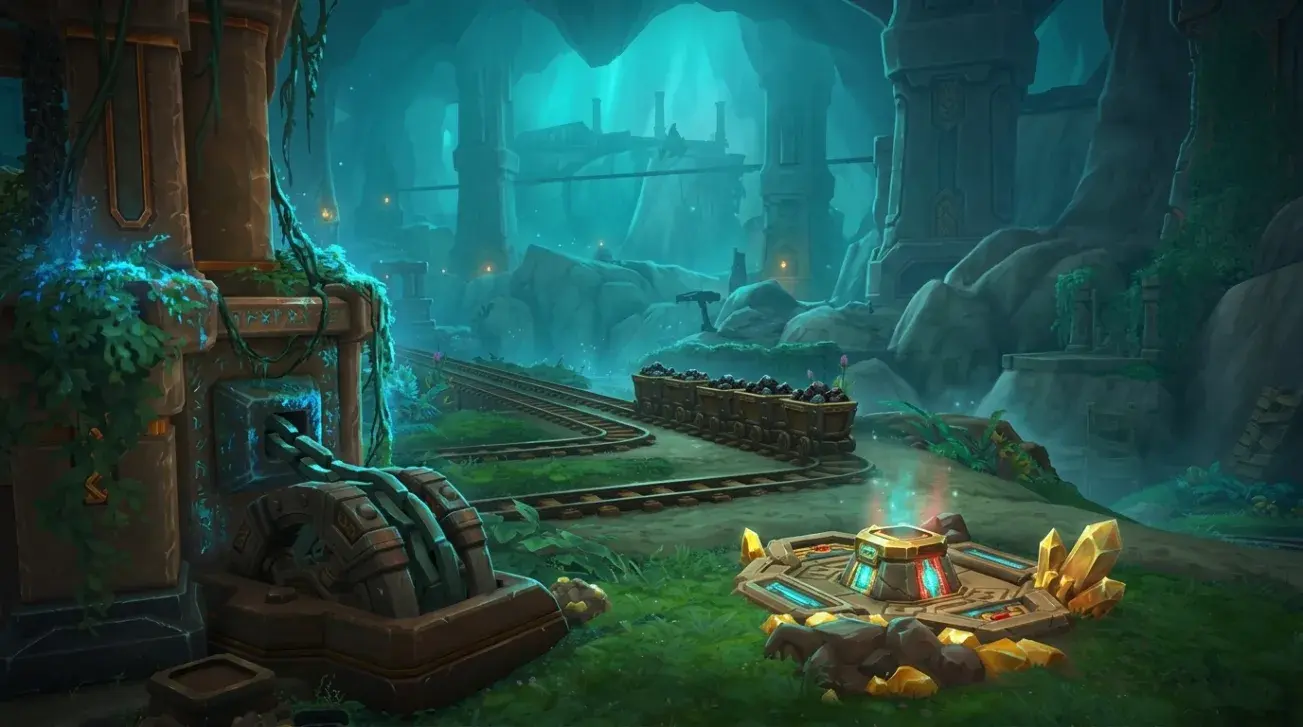
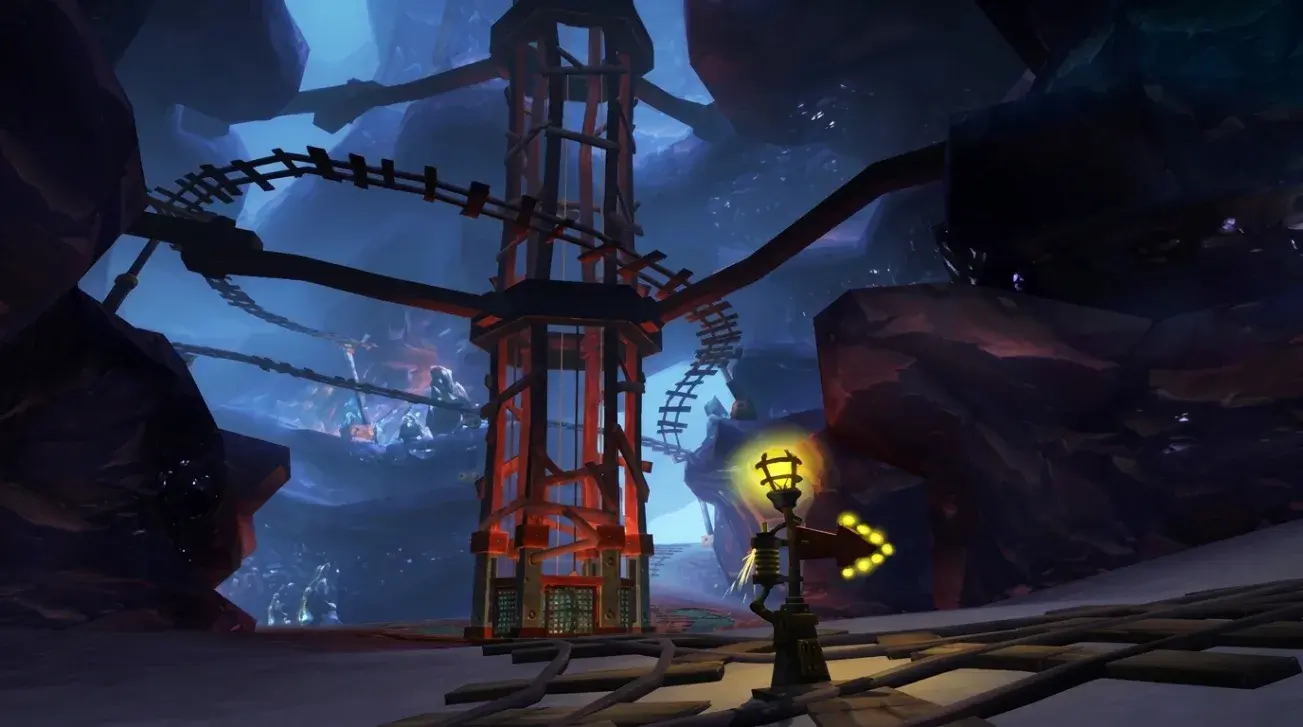
Silvershard Mines is a resource race with moving objectives. Mine carts spawn in the centre of a goblin mine and roll along fixed tracks toward depots at the ends. You do not push a cart; you stand near it and outnumber the other team, and it delivers itself. Three carts run at once, one per track, and a new one appears in the centre shortly after each capture.
It runs 10v10 as a random battleground and 8v8 in Battleground Blitz.
How control works
A visible circle surrounds each cart. Your team controls it while you have more players inside that circle than the enemy does, and a bar shows the progress toward the tag flipping.
Two properties of that rule decide most matches:
- A one-player lead is a full-speed lead. Capture rate does not scale with how badly you outnumber the enemy. Six players on a cart tag it no faster than two, so the other four are wasted.
- An uncontested cart tags several times faster than a contested one. Arriving before the enemy is worth more than winning the fight once they arrive.
Together those turn Silvershard into a rotation puzzle rather than a series of team fights. The team that keeps arriving first with two players wins against the team that keeps arriving second with six.
The tracks
Two switches sit at the track intersections, they take a few seconds to flip, and you do not need control of a cart to change the track it is on. That is why the map has five possible routings rather than three, and the game names all five in Mine Cart Courier: East to South, North to West, South, East to North, and North to East.
Players do not use those names. The three carts are called by their destinations: lava in the southeast, water or mid in the southwest, and top in the northwest. Both vocabularies describe the same map, and the achievement is the only place the official one appears.
Why the long track is a trap
Blizzard states it plainly: a cart is worth the same on capture regardless of which track it took. A longer route does not pay a bigger delivery.
What a longer route does give you is more seconds of holding a cart you already control, which pays a tick the whole way. That is a real but small advantage, and it costs you a team standing at the far end of the map when the next cart spawns in the middle.
So switching a cart onto the long track is worth doing when you are already ahead and want to bleed clock, and close to always wrong when you are behind, because it moves your team away from the next objective.
Which carts to take
The consistent answer across every source that covers this map is: win lava every time, plus one of the other two consistently, and concede the third. Two of three is enough, and chasing all three is how a team ends up losing all three.
Lava is the priority because it is the shortest route from the centre, so it is the cart your team can reach and finish fastest.
Sitters and rotation
Leave one to three players on a cart you already control, and move everyone else toward the next one before it spawns. The sitters do not need damage; they need to survive alone long enough for the rotation to come back.
That makes the sitter role specialisation-dependent in a way the rest of the map is not, and the specialisations currently performing in Blitz are the practical shortlist:
PvP tier list
rating first · top segment 1950+ · 7,053 playersMeta


One thing sitters must not do is die inside the circle. A death there hands the enemy several ticks of free progress on top of the kill, which is the single most expensive mistake available on this map.
Reading the three carts
All three carts are usually in motion at once, and the decision every few seconds is which one is worth walking to. Three questions settle it.
- Who is on it now? An uncontested enemy cart is tagging several times faster than a contested one, so breaking a lone sitter is worth more than adding a fifth body to a cart you already hold.
- How far from its depot? A cart two seconds from delivery is decided. Walking to it wastes the walk; walking to the next spawn does not.
- Where does the next cart appear? Always the centre. The team standing nearest the middle when a capture lands gets the next cart uncontested, which is the whole reason to concede a cart that is already lost.
The version of this that loses matches is chasing the cart with the most players fighting over it, because that is the one where your arrival changes the least.
What Blitz changes here: nothing
Silvershard is the one map in the nine-map Blitz pool that Blitz left alone. Blizzard planned no changes to it when the format launched, on the grounds that it was already fast enough, and none have been added since.
That has a concrete consequence. The rules people carry between Blitz maps do not apply here: there is no 4 second capture cast, no 30 second hold, and no 45 second ownership window, because those are rules for maps with bases and Silvershard has none. Cart control is proximity-based and works exactly as it does in a random battleground.
What does change is the team size, 8v8 instead of 10v10. With two fewer players, a three-player commitment to one cart is a much larger share of your team, which sharpens the arithmetic above rather than changing it.
Two patch 12.1 changes that land here
- Healing received in battlegrounds is down 20%. A lone sitter now survives a coordinated pick for less time, which argues for two sitters where you used to leave one.
- Knockbacks no longer work on targets under fear or disorient effects. Knocking a defender out of a cart circle is a core tool on this map, and it now fails against a target somebody has already feared. Sequence the two, or pick one.
The broad snare nerfs in the same patch cut the other way and help defenders, since peeling for a sitter with a slow is weaker than it was.
Achievements worth the detour
- Mine Cart Courier, capturing on all five track routings in one match.
- The Long Riders.
- End of the Line, which is the map's one published distance: within 20 yards of the depot.
The rules shared across all nine Blitz maps are in our Battleground Blitz guide.
FAQ
How do you capture a mine cart?
You stand inside the circle around it and outnumber the enemy players in that circle. The cart moves itself along the track. Capture rate does not scale with your numerical lead, so a one-player lead tags exactly as fast as a six-player lead.
Is the long track worth more?
No. A cart pays the same on capture whichever track it took. The long route only gives you more seconds of holding a cart you already control, and it costs you a team standing at the far end of the map when the next cart spawns in the centre.
Which carts should you take?
Lava every time, plus one of the other two consistently, and concede the third. Lava is the shortest route from the centre, so it is the cart your team can reach and finish fastest. Chasing all three is how a team loses all three.
How many track routings are there?
Five, because two switches let you redirect carts at the intersections. The game names them in Mine Cart Courier: East to South, North to West, South, East to North, and North to East. Players use destination names instead, calling the carts lava, water or mid, and top.
What does Battleground Blitz change on Silvershard Mines?
Nothing. It is the one map in the pool Blizzard planned no changes for, on the grounds that it was already fast enough. The 4 second capture cast, the 30 second hold and the 45 second ownership window do not apply, because those are rules for maps with bases. Only the team size changes, to 8v8.
Why is dying on a cart so costly?
Because it hands the enemy several ticks of capture progress on top of the kill itself. A sitter who is losing a fight is better off leaving the circle than dying inside it.