PvP
Diminishing Returns in WoW PvP: A CC Cheat Sheet
The current DR rules after the Midnight changes, all eight control categories as compact cards, the abilities players file in the wrong category, and which chains still work when a category is spent after two applications.
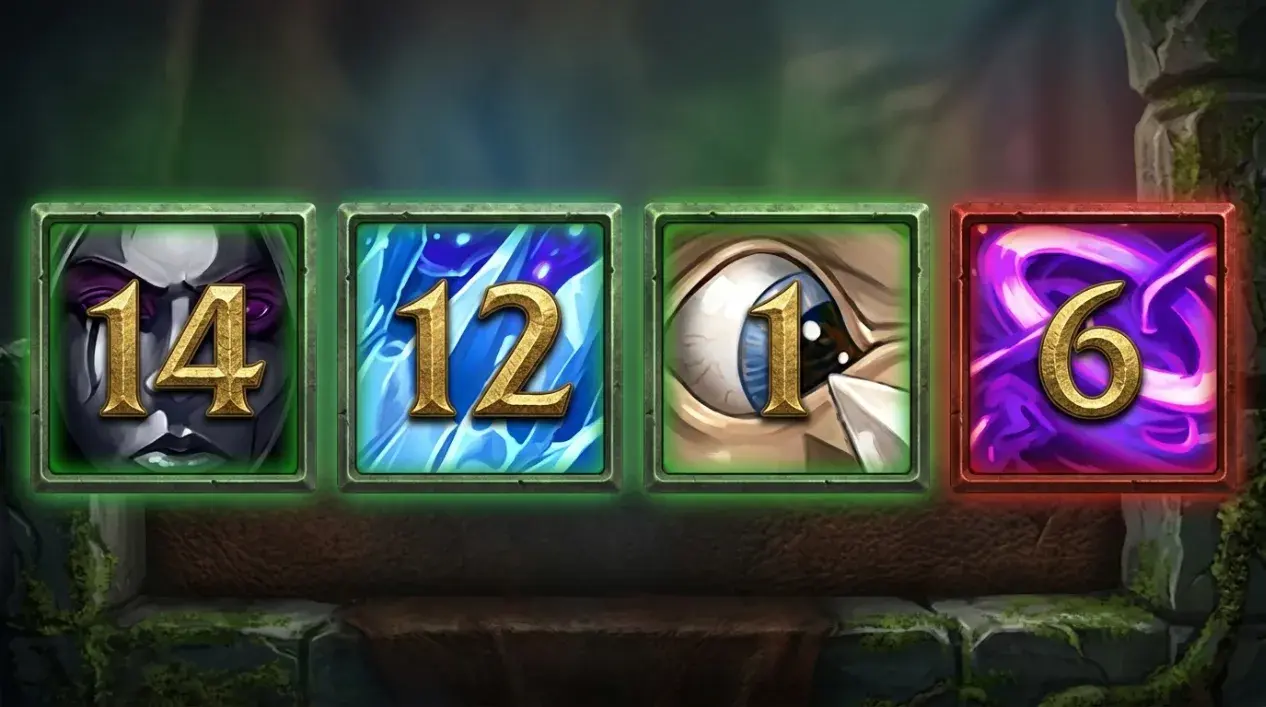
The whole rule in three sentences
Crowd control in Retail PvP is governed by diminishing returns: repeat the same category of control on the same target and each application lasts less, until the target is immune. In Midnight the ladder is short. The first application is full duration, the second is halved, and the third does not land at all.
The clock that resets it is 20 seconds, and it is counted per target rather than per attacker. Everything else in this guide is detail on those two numbers.
| Application on the same target | Duration in PvP |
|---|---|
| First | Full |
| Second | Half |
| Third | Immune, the effect does not apply |
What changed, and when
Both halves of the system moved inside the last eight months, which is why most charts in circulation are wrong in at least one place.
| Patch | Date | Change |
|---|---|---|
| Before Midnight | Since 2015 | Four steps, full, half, quarter, immune, with an 18 second reset window |
| 12.0.0 | 20 January 2026 | Immunity after two applications instead of three, and the reset window shortened to 16 seconds |
| 12.1 | 11 August 2026 | Reset window increased to 20 seconds |
Blizzard's reasoning for the latest change is worth knowing, because it tells you where the system is heading. The stated goal was to keep reducing the total time a player spends unable to control their character, so after cutting the number of applications in Season 1 they lengthened the window in Season 2. The practical effect is that a category you have spent stays spent for longer, and setups built around a fast reset no longer come back around in time.
Two smaller fixes matter for anyone building chains. Sigil of Misery stopped counting as both an incapacitate and a disorient in March 2026, and the Brewmaster PvP talent Hot Trub stopped counting as both a disorient and an incapacitate around the start of Season 2. Both were the same bug: one ability burning two categories at once.
How the 20 seconds are actually counted
The window runs from the moment the effect ends, not from the moment it lands. That is the detail that decides whether a chain works.
Work an example. You land a 4 second stun. The category is now used once. The 20 second clock starts when those 4 seconds finish, so the category occupies 24 seconds of real time before it is clean again. A second stun inside that window lands at half duration, 2 seconds, and its own clock then starts when it ends. Only after 20 uninterrupted seconds with no stun on the target does the category return to full.
This is why experienced players count categories rather than seconds. Any control you apply pushes the reset further away, so a wasted half duration stun does not just waste the stun, it delays your full duration one by another 20 seconds and change.
The eight categories
Every control effect belongs to a category, and every category is shared across all classes and all schools of magic. A paladin stun and a rogue stun feed the same bucket on the same target.
| Category | Where it matters |
|---|---|
| Stuns | Kill setups, peels, stopping a channel outright |
| Incapacitates | Removing a target from a fight without damaging it |
| Disorients | Fear-style control, breaks on damage in most cases |
| Roots | Kiting, denying a heal that requires movement, holding a flag carrier |
| Silences | Denying casts for a window rather than a single spell |
| Knockbacks | Interrupting positioning, scattering a stack |
| Disarms | PvP only, and rare enough to be forgotten in chain planning |
| Taunts | Creatures and pets rather than players |
Category cards
Each card gives what the category does, what it shares its clock with, and the abilities most likely to appear in a rated match. Examples are illustrative rather than exhaustive.
Stuns
| Stuns | Detail |
|---|---|
| Effect | The target cannot act, and damage does not break it |
| Shares DR with | Every stun in the game, from any class or pet |
| Common examples | Hammer of Justice, Kidney Shot, Cheap Shot, Shockwave, Storm Bolt, Leg Sweep, Chaos Nova, Shadowfury, Mighty Bash, Asphyxiate, Intimidation, Binding Shot, War Stomp |
| Chain note | The most contested category in the game. If you are the third person to stun, you are wasting a cooldown |
Incapacitates
| Incapacitates | Detail |
|---|---|
| Effect | The target is removed from the fight, and damage normally breaks it early |
| Shares DR with | All incapacitate effects, including the polymorph family |
| Common examples | Polymorph, Ring of Frost, Freezing Trap, Hex, Sap, Gouge, Repentance, Paralysis, Imprison, Hibernate, Incapacitating Roar, Quaking Palm |
| Chain note | Breaking on damage still consumes the application. A polymorph broken instantly costs the same category step as one that ran full duration |
Disorients
| Disorients | Detail |
|---|---|
| Effect | The target wanders uncontrolled, and damage normally breaks it |
| Shares DR with | The whole fear family, plus several effects that do not look like fears |
| Common examples | Fear, Howl of Terror, Psychic Scream, Blind, Cyclone, Intimidating Shout, Dragon's Breath, Blinding Light, Blinding Sleet, Sigil of Misery, Mind Control, Sleep Walk |
| Chain note | The category most often spent by accident, because half of it does not read as fear |
Roots
| Roots | Detail |
|---|---|
| Effect | Movement is locked, casting and attacking continue |
| Shares DR with | All root effects, though very short mini roots are exempt from DR entirely |
| Common examples | Frost Nova, Entangling Roots, Mass Entanglement, Earthgrab Totem, Steel Trap, Disable, Chains of Ice with the root talent |
| Chain note | Cheap to apply and easy to overspend, which is why root DR is usually gone before the moment you actually needed it |
Silences
| Silences | Detail |
|---|---|
| Effect | No spellcasting for the duration, movement and melee continue |
| Shares DR with | All silences, regardless of school |
| Common examples | Silence, Garrote from stealth, Strangulate, Sigil of Silence |
| Chain note | Not the same thing as an interrupt. Interrupts lock a school and have no DR; silences have DR and stop everything. Strangulate is a tank specialisation PvP talent, so the category is spent less often than the class list suggests |
Knockbacks, disarms and taunts
| Category | Detail |
|---|---|
| Knockbacks | Typhoon, Thunderstorm, Ring of Peace, Bursting Shot, Wing Buffet. Their DR behaves differently from the main categories, and the older published figures for it predate Midnight, so plan them by feel rather than by a chart |
| Disarms | PvP only and now rare. The warrior version is a Protection PvP talent rather than a baseline ability, which is why most players never see the category consumed |
| Taunts | Aimed at creatures and pets, not players. Relevant in PvP only when a hunter pet or a summoned demon is the target |
Abilities people file in the wrong category
Most broken setups come from a category being spent by an ability nobody counted. These are the recurring offenders, with the wording their tooltips actually use.
| Ability | Actual category | Why it gets miscounted |
|---|---|---|
| Cyclone | Disorient | Feels like its own effect because of the invulnerability, but the tooltip says disorienting |
| Mind Control | Disorient | The tooltip states outright that it shares diminishing returns with disorients |
| Blind | Disorient | Reads as an incapacitate; it shares its clock with Fear |
| Blinding Sleet | Disorient | Applies a slow, so it gets filed with roots |
| Sigil of Misery | Disorient | Used to consume incapacitate DR as well, until the March 2026 fix |
| Gouge | Incapacitate | Called a stun in half the voice comms in the game |
| Sap | Incapacitate | Opens on the same clock as Polymorph, which matters before the gates even open |
| Incapacitating Roar | Incapacitate | The roar reads as a fear, but it does not touch disorient DR |
| Binding Shot | Stun | Behaves like a root, spends stun DR |
| Intimidation | Stun | Delivered by a pet, so it is often left out of the count |
| Holy Word: Chastise | Depends on the talent | Incapacitates by default and stuns with Censure, so the same button spends different categories |
| Unstable Affliction | Silence | The silence only fires on dispel, so it is forgotten until it breaks a healer's chain |
| Typhoon | Knockback | The current tooltip is a knockback and a slow with no disorient component at all |
| Ursol's Vortex | Displacement, not a root | It holds people in place, so it is planned as a root; the tooltip describes a slow and a single pull back |
Chains that work and chains that waste a category
With only two useful applications per category, a chain is no longer a sequence of the same effect. It is a sequence of different ones.
Works: stun into incapacitate into disorient. Three categories, three full durations, no diminishing at all. This is the shape every setup should aim for, and it is why a team with three different control types beats a team with three stuns.
Works: full stun, then save the halved one. A second stun still lands at half duration, which is often exactly enough for a kill window. The mistake is spending it early on a peel rather than keeping it for the setup.
Wastes it: two disorients from different players. Fear and Blind are the same clock. So are Cyclone and Mind Control. The second one is half, the third does nothing, and the player who used it thinks they contributed.
Wastes it: control instead of an interrupt. A kick has no DR. A stun used as a kick costs you the category and gives the enemy 20 seconds of knowing you have nothing.
Wastes it: a breakable control on a target taking damage. An incapacitate that shatters instantly still counts as an application, so on a target your team is attacking it is close to a free category for the enemy.
What does not diminish
Not everything that stops a player is on a DR clock, and knowing the exceptions is what lets you keep pressure while your categories recover.
- Interrupts. A kick locks a school for its duration and has no diminishing returns at all. It is the only repeatable denial in the game.
- Slows and snares. Movement speed reduction is not a control category, which is why a slow can be reapplied endlessly while roots are on cooldown and on DR.
- Very short roots. Mini roots of about two seconds or less are exempt, so they do not spend your root category.
Published lists of individual no-DR abilities disagree with each other and most of them predate Midnight, so this guide gives the rule rather than a list to memorise.
DR is per target, not per player
The category belongs to the target, and every attacker shares it. Two rogues cannot chain two full Kidney Shots on the same enemy: the second is halved regardless of who cast the first.
This is the single most important thing to understand in a solo queue format, where nobody is coordinating. In Solo Shuffle and Blitz you should assume your teammates are spending categories you cannot see, and plan your own control as though the target has already taken one application of whatever you were about to use.
It also creates the counter-play. If you know the enemy team has already used its stuns on your healer, the next few seconds are the safest window your healer will get, and that is when you commit.
Reading DR during a match
Arena frames show diminishing return icons for the target, and Blizzard updated the incapacitate and disorient icons in early 2026 specifically to make them easier to tell apart. Watching those icons is faster than counting in your head, but they only tell you the state, not the plan.
The habit worth building is different: track the categories your own team is spending. Most lost setups are not caused by the enemy trinket, they are caused by two friendly players spending the same category twenty seconds apart without saying anything.
Common mistakes
Counting the old ladder. Full, half, immune. There is no quarter duration application in PvP any more.
Counting the window from when the CC lands. The 20 seconds start when the effect ends, so a long control keeps its own category busy for far longer than the number suggests.
Assuming a broken CC does not count. An incapacitate that breaks after half a second still spends the application.
Treating fears and blinds as different resources. They are the same category, and so is Cyclone.
Using control where an interrupt works. Interrupts are free of DR. Controls are not.
Planning around pre-Midnight charts. Two of the system's numbers changed in 2026, and several published category tables still list abilities that were fixed out of double counting.
Turning this into practice
Knowing the categories is only half of it. The other half is knowing which of them your own specialization actually brings, and which ones your usual partners spend without announcing it.
The spec guides list the talents and PvP talents for each specialization and bracket, which is where the exact control your build brings is decided. Talent choices frequently move an ability between categories, as Holy Word: Chastise does with Censure, so the chain you planned on paper can change with a single talent point.
Open the spec guides to check which control your build bringsFAQ
How long do diminishing returns last in WoW?
A category resets 20 seconds after the last effect from it ends, raised from 16 seconds in patch 12.1 and from 18 seconds before Midnight. The count starts when the control expires rather than when it lands, so a 4 second stun occupies about 24 seconds of the category's clock before it is clean again.
How many times can I stun the same target?
Twice. The first stun is full duration, the second is halved, and the third does not apply at all because the target is immune. Blizzard removed the old quarter duration step in patch 12.0.0, so any chart showing full, half, quarter, immune is describing pre-Midnight WoW.
Do fear and blind share diminishing returns?
Yes. Both are disorients, and so are Cyclone, Psychic Scream, Intimidating Shout, Blinding Sleet, Sigil of Misery and Mind Control, whose tooltip states outright that it shares diminishing returns with disorienting effects. This is the category most often spent by accident, because several of its members do not read as fears.
Do slows have diminishing returns?
No. Movement speed reduction is not a control category, so slows can be reapplied without limit. Roots are a separate category and do diminish, except for very short mini roots of roughly two seconds or less, which are exempt. Interrupts are also outside the system: they use a school lockout instead.
Does a crowd control effect that breaks early still count?
Treat it as counting. The application is what spends the category, so an incapacitate that shatters on the first tick of damage costs the same step as one that ran its full duration. This is why breakable control on a target your team is attacking is close to a free category for the enemy.
Is diminishing returns shared between players?
It belongs to the target, not to the caster. Every attacker feeds the same category on the same enemy, so two players cannot land two full duration stuns on one target. In solo queue formats assume a teammate has already spent the category you were about to use, and plan the second application as a halved one.
What changed about diminishing returns in Midnight?
Two things. Patch 12.0.0 in January 2026 made players immune after two applications instead of three and shortened the reset window from 18 seconds to 16. Patch 12.1 in August 2026 raised that window to 20 seconds, with Blizzard stating the goal was to keep reducing the total time players spend unable to control their characters. Two category bugs were also fixed during 2026, on Sigil of Misery and on the Brewmaster talent Hot Trub, both of which had been consuming two categories at once.