Arena
WoW Dampening Explained: How It Works in Arena
How Dampening works in WoW arena: it reduces healing and absorbs by 1% every 10 seconds, when it begins in 2v2, 3v3 and Solo Shuffle, and how to adjust your play as it climbs.
What Dampening is
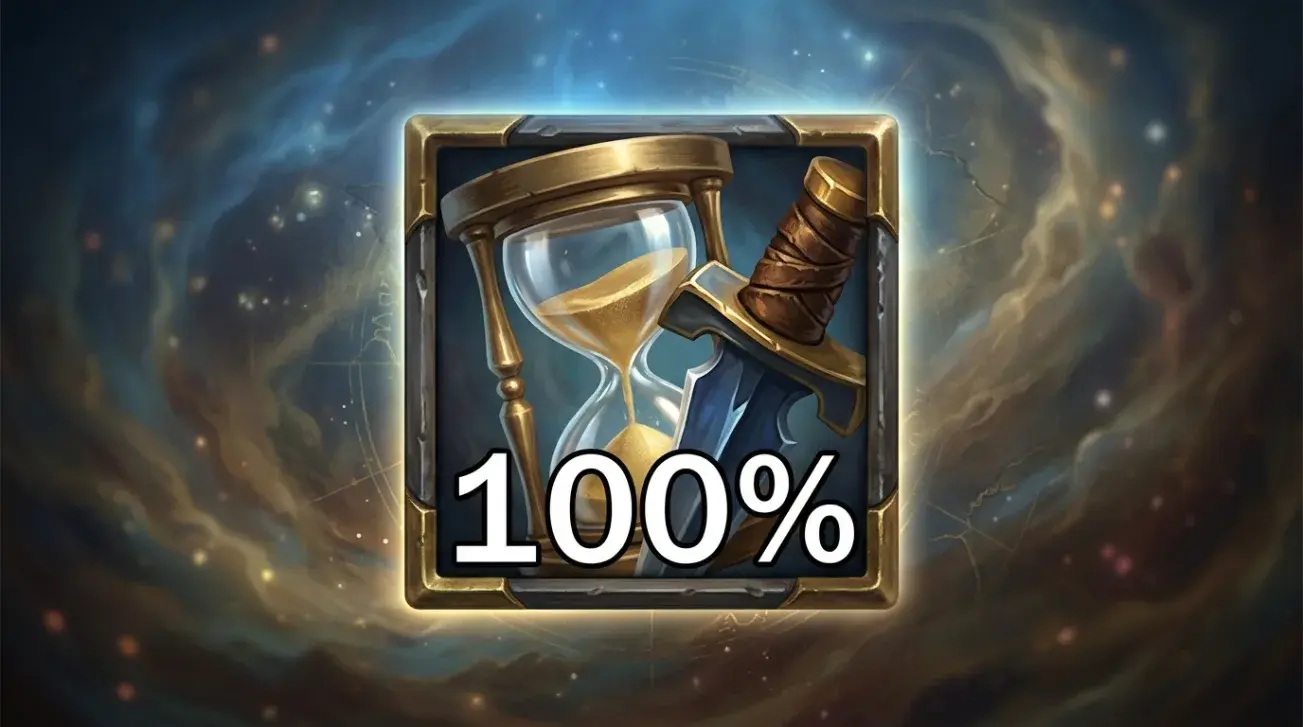
Dampening is a debuff that reduces the healing and absorption you receive, and it grows stronger for the whole length of an arena match. It exists so games cannot last forever: as the match drags on, healing matters less and less, until damage wins no matter how well a healer plays. If you have ever watched a fight where nobody seemed able to die and then everybody suddenly did, Dampening is why.
It only touches incoming healing and shields. It does not reduce damage, crowd control, or anything else. A player at 40% Dampening deals full damage and takes full damage; they simply get far less value from every heal and every absorb.
How fast it climbs
Dampening builds one stack at a time, and each stack cuts healing and absorption by 1%. A new stack lands every 10 seconds, so the effect rises by 6% a minute once it is running. In a mode where Dampening is already active, that means roughly 30% five minutes later and 60% ten minutes later. There is no announced ceiling; it keeps climbing until someone dies, and at high stacks a full cast heal restores almost nothing.
Because the rate is fixed, Dampening is a clock you can read. If you know how long the fight has run, you know how much your heals have been cut, and you can decide whether to keep trading or to force a kill before healing stops mattering.
When it starts in each mode
The rate is the same everywhere it appears, but the starting point is not. That difference is what makes 2v2 and 3v3 feel like completely different games.
| Mode | When Dampening begins |
|---|---|
| 2v2 arena | Almost immediately, a few seconds after the gates open |
| 3v3 arena | After five minutes, once the opening has played out |
| Solo Shuffle | Present from early in every round, so rounds end quickly |
| Rated and casual battlegrounds, including Blitz | None at all |
In 2v2, Dampening is running from the first exchange, which is why two-player games reward early pressure and punish teams that plan to grind a long war of attrition. In 3v3, the first five minutes are played at full healing, so setups, cooldown trades, and positioning decide the game before Dampening ever appears; when it does, it forces a resolution on a match that has stalled. In Solo Shuffle, every round is fought under Dampening pressure from the start, which is a large part of why rounds are short and a healer can rarely stall one out to a reset. This is the mode where Dampening bites hardest, and the players at the top of the Solo Shuffle ladder are the ones who close a round before healing stops mattering:
| Rank | Player | Rating | W / L | Games | Guild | Realm | 24h |
|---|---|---|---|---|---|---|---|
| #1 |    HabibieuArea 52 HabibieuArea 52 | 2790 | 83/5062% | 133 | <Chances Are We Are Drunk> | Area 52 | 0 |
| #2 |    NatooeasyArea 52 NatooeasyArea 52 | 2770 | 97/3673% | 133 | <vetmo> | Area 52 | 0 |
| #3 | AlphawolfKilrogg | 2763 | 96/7556% | 171 | <daddy> | Kilrogg | 0 |
| #4 |   YeyIllidan YeyIllidan | 2747 | 105/6163% | 166 | Illidan | 0 | |
| #5 |    DentabilisArea 52 DentabilisArea 52 | 2731 | 98/3574% | 133 | Area 52 | +46 | |
| #6 |    ShadehTichondrius ShadehTichondrius | 2725 | 67/3566% | 102 | Tichondrius | 0 | |
| #7 |    HeckleburyMal'Ganis HeckleburyMal'Ganis | 2711 | 110/5865% | 168 | <dgb> | Mal'Ganis | 0 |
| #8 | WildcardLaughing Skull | 2711 | 98/6959% | 167 | Laughing Skull | 0 | |
| #9 |  MvqxIllidan MvqxIllidan | 2704 | 103/7359% | 176 | <carried by vices> | Illidan | 0 |
| #10 | ClaudiogodtvNemesis | 2702 | 100/7457% | 174 | <No Peel No Heal> | Nemesis | 0 |
Battlegrounds do not use Dampening. A rated battleground or a Battleground Blitz match is decided by objectives and numbers, so a healer keeping a flag carrier alive is never fighting a healing tax on top of everything else.
How Dampening should change your play
Dampening rewards the team that treats healing as a resource that expires. Early, while healing is strong or full, defensive cooldowns and heals buy real time, so spend them to survive setups and answer burst. Later, as Dampening climbs, the same cooldowns buy less, so the priority shifts to landing your own kill window before your heals stop working.
Damage dealers should line up their strongest burst with crowd control on the enemy healer, and they should do it earlier as Dampening rises, because a healer who is silenced or stunned at 50% Dampening has almost no way to recover the health you take. Healers should stop trying to top the team off at high stacks and instead ration cooldowns to survive specific bursts, since a large heal that lands for a fraction of its value is wasted global cooldowns you needed for defensives.
Why the loser is usually out of cooldowns, not out of health
At high Dampening, raw healing throughput barely matters, so games are decided by defensive cooldowns and crowd control rather than by who out-heals whom. The team that still has a trinket, a wall, and a kick when the killing blow goes out is the team that survives it. This is why cooldown tracking wins dampened games: if you know the enemy healer used their major defensive and their trinket, the next hard swap with crowd control on top of them is very hard to answer once healing is already taxed.
It is also why a comp that can force defensives early and then reset the fight is strong in long 3v3 games. Every cooldown the enemy spends before Dampening ramps is a cooldown they will not have when it matters. The teams climbing 3v3 right now are the ones that win these long, dampened games on cooldown discipline:
| Rank | Player | Rating | W / L | Games | Guild | Realm | 24h |
|---|---|---|---|---|---|---|---|
| #1 | ZizdhSargeras | 2548 | 117/3676% | 153 | <Zaebal> | Sargeras | 0 |
| #2 |    ZaegornStormreaver ZaegornStormreaver | 2533 | 131/4276% | 173 | <Zaebal> | Stormreaver | 0 |
| #3 |    SwïmShadowsong SwïmShadowsong | 2499 | 126/3180% | 157 | Shadowsong | 0 | |
| #4 |  ZentheonxMal'Ganis ZentheonxMal'Ganis | 2492 | 110/2979% | 139 | Mal'Ganis | 0 | |
| #5 |  MontagehpalIllidan MontagehpalIllidan | 2483 | 118/4672% | 164 | <pros only> | Illidan | 0 |
| #6 |   DoritoxdDuskwood DoritoxdDuskwood | 2476 | 119/3577% | 154 | <and he say me i noob LOL> | Duskwood | 0 |
| #7 |    UnholyDaggerspine UnholyDaggerspine | 2419 | 87/3472% | 121 | Daggerspine | +47 | |
| #8 |    EnvyionSargeras EnvyionSargeras | 2413 | 92/1784% | 109 | <dgb> | Sargeras | 0 |
| #9 | OnryôIllidan | 2401 | 125/5370% | 178 | <pros only> | Illidan | 0 |
| #10 | MagnuszZul'jin | 2400 | 125/5868% | 183 | <Fury> | Zul'jin | 0 |
Where to go next
Dampening is one of the systems that separates arena from battlegrounds. How the rating that rewards handling it is calculated is in our PvP rating system guide, and the crowd control that decides a dampened game is covered in PvP diminishing returns.
FAQ
Does Dampening reduce damage as well as healing?
No. Dampening only reduces incoming healing and absorption effects. Damage, crowd control, and everything else are unaffected, so a heavily dampened player still deals and takes full damage.
Do battlegrounds have Dampening?
No. Dampening appears only in arena modes: 2v2, 3v3, and Solo Shuffle. Rated battlegrounds and Battleground Blitz have none.
When does Dampening start in each mode?
In 2v2 it begins within a few seconds of the gates opening. In 3v3 it begins after five minutes. In Solo Shuffle it is present from early in every round, which is part of why rounds end quickly.
Is there a maximum amount of Dampening?
There is no announced ceiling. It keeps gaining 1% every 10 seconds until the match ends, and at high stacks a full heal restores almost nothing.