News
WoW Forever Deep Dive: Rulesets, Racials and the Legacy System
World of Warcraft: Forever is going realmless. Players choose Normal, PvP, Roleplaying or Hardcore instead of a server, cross-ruleset grouping is not supported, and a dead Hardcore character can transfer out. Racial abilities move to two active and two passive per race, talent trees gain a 16-point milestone, and Legacy Points are earned account-wide but spent per alt. Camping, professions, itemization and transmog all change, and Paladins were used as the worked example for the class updates.

Four rulesets replace the realm choice
World of Warcraft: Forever is going realmless. Instead of picking a server before creating a character, players pick a ruleset that matches how they want to play, and Blizzard described four: Normal, the baseline experience where player-versus-player combat requires mutual consent; PvP, "for players who want every trip into contested territory to carry more danger, excitement, and world conflict"; Roleplaying; and Hardcore, arriving after launch. Retail handles the same choice with War Mode, which is toggled on and off rather than fixed when the character is made.
Each ruleset behaves like its own large ecosystem rather than a single traditional realm. Cross-ruleset grouping is not supported, factions stay separate so Horde and Alliance players still cannot group together, and everything else - grouping, dungeons, raiding - happens with players who chose the same ruleset.
Hardcore runs in one direction. It stays a fully enclosed ecosystem, but a Hardcore character that dies can transfer to another ruleset, including PvP. Collections and Legacy Points are account-wide across rulesets with Hardcore as the exception: progress earned there can become available elsewhere, and progress from other rulesets does not flow back into it.
For the PvP ruleset in particular, Blizzard says faction balance remains an important consideration and that Forever will include systems intended to support Horde and Alliance balance similar to the approach introduced in Season of Discovery.
Two server-side changes arrive with it. Characters use two-part names, a first and a last name, unique per region, which leaves more room for original names such as "Ana Forever". Players can also set a language preference and meet others who share it.
Racials are being rebuilt around two active and two passive abilities
Racial abilities have been reworked to feel stronger and more distinct without pushing every race toward the same strengths. Each race now has two active and two passive abilities, tuned to provide a similar amount of offensive power while preserving signature utility.
Dwarves keep Stoneform's focus on removing and granting immunity to Bleeds, Poisons and Diseases, but its defensive bonus now reduces physical damage taken instead of increasing armor, which makes it useful to more classes. Find Treasure can stay active alongside other tracking abilities, Mace Specialization increases critical strike chance with all spells and abilities while a mace is equipped, and Big Game Hunter grants increased damage against Beasts.
Undead racials move the same way. Will of the Forsaken still removes Charm, Fear and Sleep, but no longer grants immunity to those effects. Cannibalize now restores Mana as well as Health, which matters for  Mages,
  Warlocks,
  Paladins and
  Priests. Underwater Breathing is unchanged, and Touch of the Grave is a new damage-focused racial that gives attacks a chance to drain life from enemies.
Six new class and race combinations
Blizzard is adding six combinations that the original game never had, with more planned for future updates: Gnome Priest, Human  Hunter, Dwarf
  Shaman, Orc Mage, Troll Warlock and Undead Paladin.
Talent trees keep their shape and gain a 16-point milestone
Talent trees keep the familiar structure and the same number of rows, with one-point milestone talents at 11, 21 and 31 points, now joined by a new 16-point milestone. Some talents remain exactly as they were in patch 1.12 and some have been adjusted or improved. Talents that granted key class buffs - Divine Spirit, Blessing of Kings and Improved Mark of the Wild - are baseline for their classes.
Paladins are the worked example for the class updates
Blizzard used one class to show the wider philosophy: give each specialization new tools while preserving meaningful gaps in the toolkit.
Paladin
- Holy Strike at level 6, an instant weapon strike that deals Holy damage on a 12-second cooldown.
- Seals are no longer consumed by casting Judgment, reducing the busy work of recasting them.
- Seal of Fury is a tank-focused Seal that favors fast weapons, grants small absorb shields, and causes Judgment to taunt while the Seal is active.
- Consecration is baseline at level 20, with high damage and threat on the first four targets it hits and lower damage and threat beyond that.
 Holy Paladin
- Improved Holy Strike reduces Holy Strike's cooldown.
- Voice of Truth grants temporary immunity to Silence and Interrupts.
- Reverence allows Paladins to regenerate Mana from Spirit while casting.
- Infusion of Light rewards Holy Shock and Flash of Light critical heals by reducing the cast time of Holy Light.
- Holy Shock moves to a 10-second cooldown.
- Consecrated Ground causes enemies in Consecration to take increased Holy damage.
- Light's Vigil is a high-cost cooldown that can reset Holy Shock and trigger either extra damage against enemies or party-wide healing through an ally.
 Protection Paladin
- Improved Seal of Fury grants Mana when Seal of Fury absorbs damage.
- Shield Specialization grants additional Mana on blocks.
- Swift Judgment can reset Judgment once per minute, so a missed taunt does not end the moment.
- Templar's Bulwark gives a powerful absorb shield based on maximum health while interacting with Forbearance.
- Reckoning has been redesigned to also trigger from blocks, so it works for tanks who are immune to critical hits.
- Iron Creed lets timed Holy Strikes reduce incoming damage for a short window.
 Retribution Paladin
- Vindication now reduces enemy Attack Power while increasing the Paladin's own.
- Sacred Arbiter empowers Holy Strike and refreshes Judgments on the target.
- Champion of the Light increases spell damage based on Intellect.
- Instrument of the Law reduces threat generation while making Holy Wrath instant.
- Twist of Light supports Seal Twisting without a swing-timer add-on by letting a new Seal echo into the next melee swing.
The limits stay in place. Paladins still lack an interrupt, still cannot slow targets the way some other classes can, and still reach their taunt through the Seal and Judgment system rather than a single-purpose button. They remain especially strong against Undead and Demons through Exorcism, Holy Wrath and Turn Undead, with fewer ranged options against everything else.
Itemization is rebuilt to unsolve the gearing path
Combat keeps Classic's pacing. A solo player can expect an ordinary creature to take roughly 10 to 15 seconds to defeat, dungeon play stays tactical enough that crowd control is often the right answer to a pull a tank cannot safely hold, and damage dealers still have to respect Threat and use area damage only when it is safe.
Itemization is where the changes concentrate. Spell, melee and ranged hit chance are combined into one stat, and so are spell, melee and ranged critical chance. That helps hybrid specializations such as Retribution Paladin and  Enhancement Shaman, and lets
  Warriors, Hunters and
  Rogues improve the reliability of Taunts, Poisons and Traps. Weapon skill works as it always has, but items carry less of it each, so they are not always the obvious best choice. Bonus healing now also includes one third as much bonus damage.
New stats widen the choices further. Some items reduce the chance for attacks to be parried or dodged, and spellcaster weapons now grant spell damage and healing, so casters can look forward to level-up weapons the way melee classes always have. Trinkets are being pushed toward more varied, situational effects, and new effects tie item choices to specific environments such as Woodlands, Mountains or Deserts and to specific creature types.
The pass reaches the whole game. Every dungeon drop has been re-examined, unique dungeon boss items are now blue quality, set bonuses have been improved, hundreds of new drops and rare-creature drops have been added, world-drop epics have been improved, and quest rewards have been updated or expanded to support more classes and roles.
Camping turns the Cooking Fire into a reason to stop
The Cooking profession's simple Cooking Fire becomes a Basic Campfire, and placing one creates a campsite where players can rest and reach vendors, repairs, profession workspaces and one-hour buffs. Those buffs are not instant: a player has to sit by the fire for a few moments and get rested before heading back out.
A Basic Campfire accepts up to three special crafted objects from nearby players. Each player can contribute one, and those objects share a one-hour cooldown. Every profession has three different objects learned at different skill levels, and each provides its own buff or utility. Blacksmiths place a Sharpening Wheel that increases Attack Power, Tailors a Faction Banner that increases Spirit, and Herbalists an Incense Candle that increases Intellect. These are variants of buffs normally provided by specific classes and do not stack with them.
The first campsite objects are learned at profession skill level 20, from trainers or from nonplayer characters who introduce camping. More advanced ones come from Blueprint recipes that drop from specific dungeon bosses: Alchemists can place an Alchemy Lab, Leatherworkers a Tanning Rack required for advanced Leatherworking recipes, and Cooks can learn upgraded Campfires that allow five or ten objects at a camp. Professions also gain over 600 new recipes across level ranges, and crafted food has been adjusted to grant a small experience bonus alongside stat boosts.
Legacy Points reward starting over
The Legacy System is built to make leveling alternate characters more rewarding without Hardcore's consequences. Players earn Legacy Points by completing Legacy Challenges across several categories, with examples including leveling a specific class or reaching a particular skill milestone, and spend them in Legacy Trees that begin with Professions, Adventure and Resourcefulness.
The Adventure tree carries Well Rested, which increases rested experience gains and raises the rested experience cap. Professions carries Bountiful Harvest, which increases materials gathered from mining, herbalism or skinning. Deeper in Resourcefulness, Reagent Economy can remove reagent requirements from class abilities.
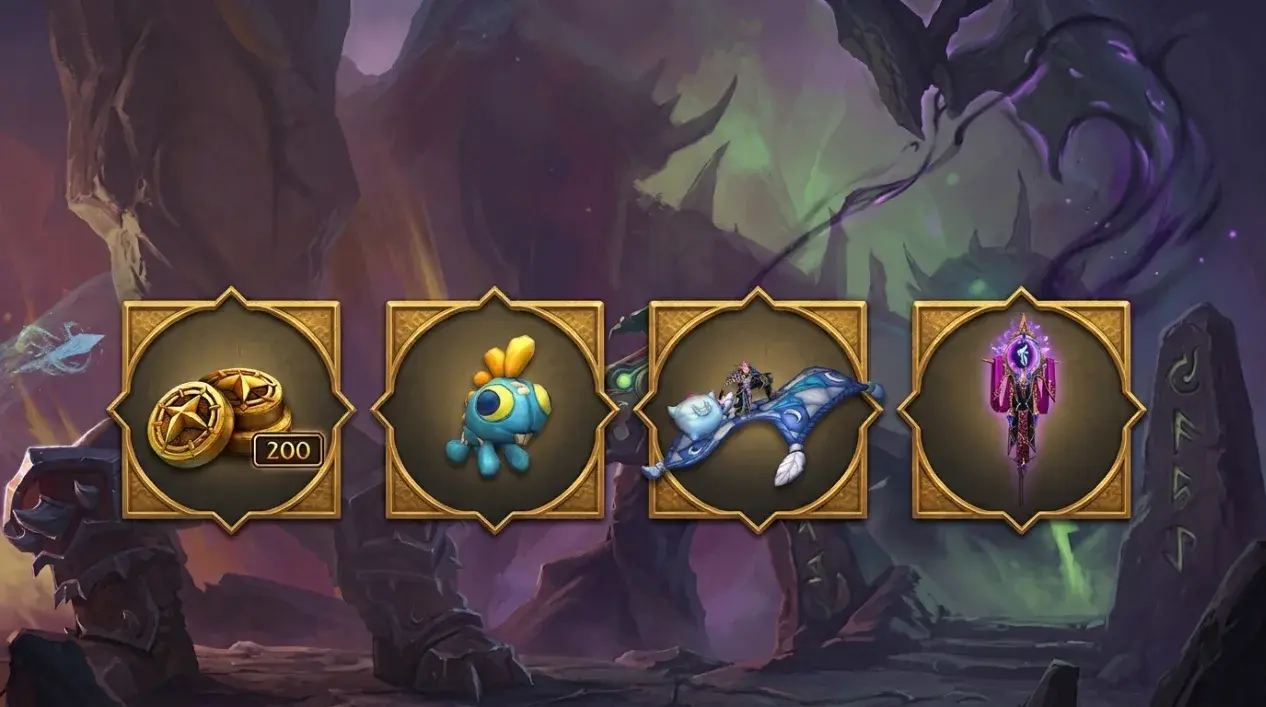
The flexible part is the accounting: Legacy Points are shared across all alts, while each character spends its own points in its own trees. At launch a character can spend up to 16 points, and players can earn up to 65 Legacy Points at the start. Everything beyond the spending cap still counts toward the Legacy Reward Track, which unlocks cosmetic or prestige rewards such as the Spectral Bear Cub without granting a competitive advantage. Forever also adopts the Burning Crusade-style mount cost, shifting the up-front price into training and granting a mount when the riding skill is learned.
Transmog can be switched off completely
Players visit a transmogrifier in certain cities to configure outfits or disable the system entirely, and choosing Classic Mode at first launch disables it automatically. With it disabled a player sees everyone else in their equipped gear, while still collecting appearances from new gear in case they change their mind, and still seeing other players' hidden helm and cloak settings.
Collection rules changed to keep appearance hunting out of loot disputes. A bind-on-pickup Uncommon or Rare item grants its appearance to all eligible looters when it is looted, so an upgrade is not contested by someone who only wants the look. Epic raid drops grant the appearance on acquisition only to the player the item binds to. Poor and Common items grant appearances as soon as they are looted, without binding. Type rules still apply - plate to plate, cloth to cloth - and level restrictions on valid appearances lift at level 60.
The dates to plan around
The Forever beta begins Thursday, September 17, and the game launches globally on November 4, 2026 at 3:00 p.m. PST. Blizzard is also collecting questions for a live World of Warcraft Q&A on September 17, the same day the beta opens. The pre-purchase tiers, the Collector's Edition and the rest of the announcement are in the BlizzCon What's Next announcements.
Retail's own calendar is an order rather than a schedule. Content update 12.1.5 is on the PTR now, Midnight: Eclipse follows as the final major content update to Midnight, and Season 3 arrives shortly after Eclipse launches carrying a new PvP season. No date is attached to Eclipse or to Season 3, so there is nothing on the Retail side to rush toward. The PvP half of that announcement is covered in the BlizzCon PvP announcements.
Everything described about PvP in Forever so far is world PvP: the ruleset a player picks and the faction balance systems behind it. Rated play still means Retail, where the current season is the one the live cutoffs apply to. If the choice is between the beta on September 17 and finishing something in the season already running, these are the thresholds that decision is really about.
Cutoffs
All
Official: updated 11m ago
How those thresholds are calculated is in the PvP cutoffs guide, and the full regional tables are on the EU cutoffs page and the US cutoffs page. For world PvP as Retail runs it today, the War Mode guide covers the toggle, the rewards and the risks.
FAQ
Do I still have to choose a realm in World of Warcraft: Forever?
No. Forever is going realmless. Instead of a server, a player chooses a ruleset: Normal, where player-versus-player combat requires mutual consent; PvP; Roleplaying; or Hardcore, which arrives after launch. Each ruleset behaves like its own large ecosystem rather than one traditional realm.
Can I group with a friend who picked a different ruleset?
No. Cross-ruleset grouping is not supported, and factions stay separate, so Horde and Alliance players still cannot group together. Grouping, dungeons and raids happen with players who chose the same ruleset. Collections and Legacy Points are account-wide across rulesets, with Hardcore as the exception.
What happens to a Hardcore character when it dies?
It can transfer to another ruleset, including PvP. Hardcore itself stays a fully enclosed ecosystem: progress, collections and rewards earned there can become available in other rulesets, but progress from other rulesets does not flow back into Hardcore.
Does World of Warcraft: Forever have arena or rated battlegrounds?
Everything Blizzard has described about player-versus-player combat in Forever is world PvP: the ruleset chosen at character creation, and systems intended to support Horde and Alliance balance similar to the approach introduced in Season of Discovery. Rated play - arena, rated battlegrounds, ratings and seasons - still means Retail, where the current season is running and Season 3 brings a new PvP season after Midnight: Eclipse.
When does World of Warcraft: Forever launch?
The beta begins Thursday, September 17, and the game launches globally on November 4, 2026 at 3:00 p.m. PST. Blizzard is also taking questions for a live World of Warcraft Q&A on September 17, the same day the beta opens.
Are the racial abilities the same as they were in Classic?
No. Each race now has two active and two passive abilities, tuned for a similar amount of offensive power while keeping signature utility. Stoneform's defensive bonus reduces physical damage taken instead of increasing armor, Will of the Forsaken removes Charm, Fear and Sleep but no longer grants immunity to them, Cannibalize restores Mana as well as Health, and Touch of the Grave is a new damage-focused Undead racial.
Can I turn transmog off in World of Warcraft: Forever?
Yes. A transmogrifier in certain cities configures outfits or disables the system entirely, and choosing Classic Mode at first launch disables it automatically. With it off a player sees everyone in their equipped gear, still collects appearances from new gear, and still sees other players' hidden helm and cloak settings.